Showing posts with label story-telling. Show all posts

Sunday, January 29, 2012

On Strategy and Mice

The mice grew fed up with their powerlessness and the fact that they always fell prey to those who are stronger. They decided to go to the Old Wise Owl for advice. The Owl contemplated them for an instance and pronounced his decision:
- Hedgehogs have needles to protect them from predators. You must become hedgehogs.
The mice were ecstatic with joy and went home happy that soon their misery would be over. Passing the rye field they stopped all of a sudden having realized that they had absolutely no idea how to become hedgehogs. So they turned on their heels (or whatever it is that the mice typically would turn on) and went back to the Old Wise Owl. The Owl was not happy to be bothered again as it disturbed him from an extremely critical task of sitting high perched up in a tree and looking terribly important. The mice squeaked in perfect unison:
- Dear Owl. You are omnisapient and awfully clever, please, do tell us how we should become hedgehogs.
The Owl looked down at them in disbelief:
- How should I know? It's pure tactics, and I am all about strategy.


Friday, September 23, 2011

Story Telling vs Corporate Speak


Thursday, June 16, 2011

Commencement Speeches and Why We Need Inspirational Stories

I don´t think there is a single business school student who has not listened to Steve Job´s commencement address at Stanford in 2005:


Steve Jobs did three things that made his address so memorable to an extent that the speech is now used in classrooms to teach rhetoric and composition:
  • relating personal experiences: who knows your personal stories better than you and, more importantly, who is going to retell them with same conviction and confidence? It's easy to talk about others, about things in general and something very speculative. It takes courage to talk about yourself, but then it's how you change the world and you change yourself at the same time.
  • clear structure and the power of three: it is a magic number - it has to be the three wise men, the three little pigs, the three tasks and surely, the three life stories from Steve Jobs (well, the Snowwhite is ruining the party with her dwarfs but let's ignore that for the time being, and really - seven is also a cool number). The transparency of Job's speech is amazing: a few introductory words, telling the audience what he is going to talk about, three clear and concise stories and finishing off with repeating what he has just been talking about. Textbook precision!
  • appealing emotionally and talking directly to the audience: engage not only the mind but also the hearts of people, know whom you are talking to: university students and not the same crowd as NASA engineers but they might equally relate to topics of death, love, failure and friendship. At the same time, each and everyone is a homogeneous group will respond differently to the emotional stimuli you are using in your speech simply because all of us have lived through different life experiences and one can never know for sure what strings in people's hearts and minds you'll be strumming when you are up there on the stage holding the mike with your sweaty fingers. Sweaty and at times shaking - you are talking about yourself there as well, you are putting yourself out, and it is the greatest danger and the most powerful tool you can use: laying yourself bare at the mercy of the audience and being strong enough to take it no matter which way the situation turns out.

The month of May normally brings many celebrities to university campuses to share their personal experiences, to give a sense of direction, provide guidance, inspire, ignite, provoke, console - the power of speakers is in their ability to sense the needs of the audience and speak directly to the hearts and minds of people. Listen to these 11 celebrities talking at various graduation ceremonies around the USA: http://bit.ly/iegObB (Tom Hanks is mischievously provocative :)

Monday, April 4, 2011

Management Course in 5 Lessons through Story-Telling (funny!)

Lesson 1:
A man is getting into the shower just as his wife is finishing up her shower, when the doorbell rings. The wife quickly wraps herself in a towel and runs downstairs. When she opens the door, there stands Bob, the next-door neighbor. Before she says a word, Bob says, 'I'll give you $800 to drop that towel.' After thinking for a moment, the woman drops her towel and stands naked in front of Bob, after a few seconds, Bob hands her $800 and leaves. The woman wraps back up in the towel and goes back upstairs. When she gets to the bathroom, her husband asks,
'Who was that?'
'It was Bob the next door neighbor’ she replies.
'Great,' the husband says, 'did he say anything about the $800 he owes me?'
Moral of the story:
If you share critical information pertaining to credit and risk with your shareholders in time, you may be in a position to prevent avoidable exposure

Lesson 2:
A priest offered a Nun a lift. She got in and crossed her legs, forcing her gown to reveal a leg. The priest nearly had an accident. After controlling the car, he stealthily slid his hand up her leg.
The nun said, 'Father, remember Psalm 129?'
The priest removed his hand. But, changing gears, he let his hand slide up her leg again.
The nun once again said, 'Father, remember Psalm 129?'
The priest apologized 'Sorry sister but the flesh is weak.'
Arriving at the convent, the nun sighed heavily and went on her way. On his arrival at the church, the priest rushed to look up Psalm 129. It said, 'Go forth and seek, further up, you will find glory.'
Moral of the story:
If you are not well informed in your job, you might miss a great opportunity.

Lesson 3:
A sales rep, an administration clerk, and the manager are walking to lunch when they find an antique oil lamp. They rub it and a Genie comes out.
The Genie says, 'I'll give each of you just one wish.'
'Me first! Me first!' says the admin clerk. 'I want to be in the Bahamas , driving a speedboat, without a care in the world.'
Puff! She's gone.
'Me next! Me next!' says the sales rep. 'I want to be in Hawaii , relaxing on the beach with my personal masseuse, an endless supply of Pina Coladas and the love of my life.'
Puff! He's gone.
'OK, you're up,' the Genie says to the manager.
The manager says, 'I want those two back in the office after lunch.'
Moral of the story:
Always let your boss have the first say.

Lesson 4
An eagle was sitting on a tree resting, doing nothing.
A small rabbit saw the eagle and asked him, 'Can I also sit like you and do nothing?'
The eagle answered: 'Sure, why not.'
So, the rabbit sat on the ground below the eagle and rested. All of a sudden, a fox appeared, jumped on the rabbit and ate it.
Moral of the story:
To be sitting and doing nothing, you must be sitting very, very high up.

Lesson 5
A turkey was chatting with a bull.
'I would love to be able to get to the top of that tree' sighed the turkey, 'but I haven't got the energy.'
'Well, why don't you nibble on some of my droppings?' replied the bull. They're packed with nutrients.'
The turkey pecked at a lump of dung, and found it actually gave him enough strength to reach the lowest branch of the tree. The next day, after eating some more dung, he reached the second branch. Finally after a fourth night, the turkey was proudly perched at the top of the tree. He was promptly spotted by a farmer, who shot him out of the tree.
Moral of the story:
Bull S *# t might get you to the top, but it won't keep you there.

Wednesday, March 23, 2011

Story-Telling and Social Media

The Dragonfly Effect: Quick, Effective, and Powerful Ways To Use Social Media to Drive Social ChangeI already talked about Jennifer Aaker as the guru of personal branding. In that blogpost I posed three questions:

  • what sets you aside from the rest of the crowd?
  • why is it difficult for others to be what you are?
  • how do you communicate your personal brand?

Some of the answers can be found in Jennifer´s new book "The Dragonfly Effect", which mainly talks about how social media can help in building your personal brand. One of the four “dragonfly wings” that comprise the authors’ framework and give the book its name is engagement, which they define as “truly making people feel emotionally connected to helping you achieve your goals” through storytelling, authenticity, and establishing a personal connection.

Here is just one of the stories featured in the book... but how inspiring!


Social-media engagement: A case study from The Dragonfly Effect
Scott Harrison was at the top of his world. The 28-year-old New York–based nightclub and fashion promoter excelled at bringing models and hedge-fund kings together and selling them $500 bottles of vodka. He had money and power. Yet his lifestyle brought something else: emptiness. Harrison felt spiritually bankrupt.
So he walked away, volunteering to serve on a floating hospital offering free medical care in the world’s poorest nations. Serving as the ship’s photojournalist, Harrison was quickly immersed in a very different world. Thousands would flock to the ship looking for solutions to debilitating problems: enormous tumors, cleft lips and palates, flesh eaten by bacteria from waterborne diseases. Harrison’s camera lens brought into focus astonishing poverty and pain, and he began documenting the struggles of these people and their courage.
After eight months, he moved back to New York, but not to his former life. Aware that many of the diseases and medical problems he witnessed stemmed from inadequate access to clean drinking water, he decided to do something about it. In 2006, he founded charity: water, a nonprofit designed to bring clean and safe drinking water to people in developing nations.
Harrison launched the organization on his 31st birthday by asking friends to donate $31 instead of giving him a gift. It was a success—the birthday generated $15,000 and helped build charity: water’s first few wells in Uganda. In the three years that followed, Harrison’s simple birthday wish snowballed into donations that today total more than $20 million, translating into almost 3,000 water projects spanning everything from hand-dug wells and deep wells to protection for springs to rainwater harvesting. The organization has now provided clean water to more than 1.4 million people spanning 17 countries. Its success can be explained through four design principles for generating engagement with a brand through social media.
Tell a story. Harrison’s personal journey—evoking themes of redemption, change, and hope—engaged others on an emotional level. By candidly discussing in media interviews and YouTube videos why and how he started charity: water, the thoughtful, accessible, and youthful Harrison helped viewers fall in love with him and his cause.
Empathize with your audience. Let people engage with your brand to learn what’s important to them and how it relates to your campaign. charity: water evoked empathy through the use of photographs and videos that revealed the urgency of the water problem in the developing world. Instead of relying just on statistics, the organization promoted compelling stories that forced people to think about what it would be like to live without access to clean water.
Emphasize authenticity. True passion is contagious, and the more authenticity you convey, the more easily others can connect with you and your cause. Because of charity: water’s commitment to transparency, donors not only understand the history that gave rise to the organization but also know exactly where their money goes. Reports and updates on the charity’s Web site connect donors directly to the results of their generosity.
Match the media with the message. How and where you say something can be as important as what you say. charity: water has a staff member dedicated to updating various social-media platforms and creating distinctive messages for Twitter and Facebook fan pages. The organization also relies heavily on video. One of charity: water’s most effective video projects involved convincing Terry George, the director of the film Hotel Rwanda, to make a 60-second public-service announcement in which movie star Jennifer Connelly took a gasoline can to New York City’s Central Park, filled the can with dirty water from the lagoon, and brought it home to serve to her two children. The producers of the reality TV show American Idol agreed to broadcast the spot during the program, ensuring that more than 25 million viewers saw it.

Thursday, December 23, 2010

Leadership Story

Why Should Anyone Be Led by You?: What It Takes To Be An Authentic LeaderGoing for an interview, the most difficult question might turn out to be, "How did you get here?" - and it will not be about the mode of tranport you favored that day to get to the venue. It will be about you life map, or what have you done to be at this particular stage of your career. Another difficult question (as well as a famous namesake book) is "Why should anyone be led by you?" Think for yourself, how would you answer those?

We were asked to do someting similar in the Strategic Communication class a few weeks ago. I should say that we were lucky to have a highly entertaining and deeply knowledgeable professors Des Dearlove and Stuart Crainer, authors of Thinkers 50, which is a research on business thought gurus, most likely to influence the development of the business reality as we know it.

The task was to write a personal leadership story in less 250 words, which should be a distilled message to the world of your own persona. I should say it is so much easier talking at length about yourself, but when you are confined to mere 250 words, it is a mission impossible. Next, it brings you back to the same old questions: Why should anyone be led by you?

I am posting here what I wrote and submitted as my final project to the professors. Really keen on feedback!

*******************

Sergey Gorbatov

Personal Story
Strategic Communication
December 7, 2010

My most respected high school teacher told me shortly before I graduated, “Sergey, if you want to achieve something in this life, you need to be the first, the best, or different”. I did not grasp the full value of that advice at the time, but I heeded it nonetheless. Looking back (and most importantly – looking forward), I see with clarity why I am where I am and how I got here: by being the first, the best or different.

There are few things I have been the best at. Well, in relative terms, I did gain a considerable number of awards and on a number of occasions I had to blush in front of an audience receiving an accolade or praise. Being the first gained me the reputation of an innovative first-moving go-getter. However, what truly advanced me in life is being different.

A distinct way of clothing, an atypical career path, a very special circle of friends, and many other uncommon aspects, granted me that edge I could use to stand out. Yet, it has always been a unique way to look at the world, a peculiar manner of thinking and seeing the connections that elude others that have prevented me from blending with the background or getting lost in the crowd.

I bow with utmost respect to that teacher for her invaluable lesson. It is ambitiously pleasing to be the first. It is painstakingly rewarding to be the best. It is ostentatiously crucial to be different.

Wednesday, August 11, 2010

Blogging

Everybody blogs nowadays. Really, having your personal or professional blog is considered comme il faut in the learned circles and not running one is looked down upon and is deemed something of a faut pas. At the end of last year the number of blogs on the net has reached an unfathomable figure of 126 million. So why is it so popular?

I believe we can identify the following reasons why one might start and run a blog (these are obviously not mutually exclusive or collectively exhaustible, but a good start, in my opinion):
  • you are bored and stuck in a job you don't enjoy, so is there a better way to while away your time than pouring out your negative emotions and frustrations to the anonymous, unsuspecting and all accepting Internet audience?
  • you have to do it. If you are a student and your Information Systems professor makes it a requirement to pass a class - tough for you. If you must lead a blog at work because your boss tells you so - well, at least you get paid. Quality will suffer, relationships will sour and your creative muse will take a break, but hey - life's not a tray of cupcakes in general.
  • you are not sure why you are doing it, but everyone around has one, so why not? Nobody has erased the herd instinct from the list of human motivators and believe me - it's powerful.
  • you consider it is a good idea to promote yourself in the virtual world and your blog is a part of your personal brand.
  • you are used to having a diary, it is a way to organize your thoughts and a blog is just a different format of what you used to do anyway.
  • you want to practice your writing and story-telling skills. Blogging is a playground and a jumpboard for something bigger later.
  • your blog is a form of public accountability. Once you commit something to the internet community, it will be more difficult for you to slack. Think about the 365-day blog that Julie had in that marvelous movie Julie & Julia.
  • you run a business and you want to gain direct contact with your customers. In addition to Facebook, Twitter and LinkedIn, blogging is a powerful tool of reaching out to thousands of people instantaneously. 
  • no publishing house will take your masterpieces for mass reproduction, and blogging is free and reaches the audience instantly. This is a perfect retreat for unrecognized writers, poets and paper-wasters.
  • you genuinely like writing and you have a lot to convey to the world. Your contributions are valued and you have followers who regularly check up on the most recent posts. Proliferous bloggers get attention and traffic, generating even more interest to their persona that way.
Why do you (would you) have a blog? What reasons are missing in my list?

Monday, July 5, 2010

3 Lessons from Granada

Wow! This was a fun weekend. Yes, Term 1 of my MBA journey is over and surely we took the opportunity to get out of Madrid to recharge our batteries (sufficiently depleted by the exam week) and explore the beautiful country of Spain further. What what I have seen so far, Granada takes the cake with its profoundly relaxed and laid-back provincial atmosphere, finger-licking traditional cuisine, free tapas and vast opportunities for shopping. Surrounded by Sierra Nevada mountains, it is a perfect get-away location for whichever purpose imaginable.

There were four of us in the car: my classmates Dana and Niels, and my friend Olga, who was visiting me from Moscow. I believe that four is the perfect number of people for a road trip without conflicting priorities (such as sight-seeing and shopping, even though some believe that shopping is indeed sight-seeing), and if any tensions arise, they could be easily managed.

I am deviating, however... When I was talking about story-telling in one of my previous posts (http://hrboutique.blogspot.com/2010/06/story-telling-inspirational-wisdom.html), I failed to mention that you can get inspiration for your stories from wherever: films, books, your own thoughts, borrowed stories from others, observations - the repertoire can really be boundless. Driving back from Granada to Madrid, I had enough time to think about my experiences of those three days, and they have boiled down into three important insights, which I am going to share with you now. I will codify them as:

  • View from the Top
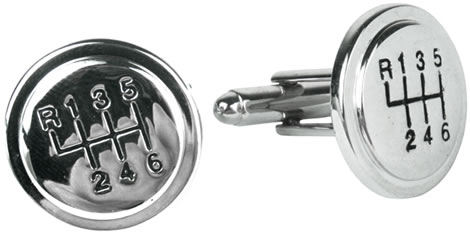
  • 6th Gear, and
  • Leapfrog
Lesson # 1: View from the Top
On Saturday, one day after our arrival in Granada, we decided to take a drive into the mountains and enjoy the magnificent vistas of the Sierra Nevada mountains. Getting up at 8 am on Saturday, when you are on vacation, is a noble deed in itself, traditionally rewarded in Granada with a cup of coffee, croissant with butter and jam and a glass of freshly squeezed orange juice. Getting out of the city was not an issue since all respectable Spaniards prefer not to grant the world with their presence well into the day, so the roads were clear and the drive was pleasant. 

As we were driving up into the mountains along a winding serpentine road, the weather was getting a bit gloomier and it started drizzling. Finally, at the mark of 2750 m above the sea level we stopped and (being awfully excited to see the snow-white mountain tops in the middle of summer) got out of the car. That was freeeeeeezing!!! The wind was blowing and I can promise - the snowflakes were circling in the air. By all means, we were not ready to go out into that kind of weather.

Insight: in the organizations getting to the top always looks so attractive and most ambitious people have it as one of their career goals - to reach an executive position and being able to make important decisions affecting the entire company. However, in many conversations that I have had with senior executives, there are certain trade-offs. Apart from longer hours, serious emotional strain, non-existent work-life balance, etc., there is something else. At the lower levels in the organization, it is about teamwork and helping each other and the general atmosphere of camaraderie and friendship. Then, as you get promoted you notice that it's not that sunny at the top. You notice that it is cold and everyone is watching their own backs. Getting to the top unprepared can result in a very quick roll down if you do not have a senior protector and adviser.


Lesson # 2: 6th Gear

Niels and I took turns driving both to and from Granada. It is a relaxed 4-5 hour drive: the roads are good and the weather was more than great - it was fantastic! Normally I drive fast and I like the feeling of control, hence my affection for cars with mechanic gear; automatic cars just don't give you that "umpf" feeling.

I have always been driving cars that have a 5-gear switch box, and naturally I have not been closely inspecting the details of a weekend rental car. Only on our way back Niels has casually mentioned to me as I was cruising on the highway in the 5th gear that it was a 6-gear car. It means that all that time I had the hidden potential to optimize the fuel consumption, which I had not taken advantage of.

Insight: often people are not aware of the hidden resources within themselves and their surroundings. Moreover, we are able to convince ourselves that there are none and give logical arguments why there cannot be anything. Still, we are so frequently proven wrong (sometimes by ourselves). Yes, we are faster, stronger and smarter than we think we are (not to confuse with overconfidence and incorrect self-image!!!) - all it takes is taking a closer look and tapping into the potential lying within. That's why feedback and (self-)observation are so important: they help us get rid of blind spots and assess our capabilities more objectively.

See related: Coaching.

Lesson # 3: Leapfrog

Have you ever played leapfrog on the road? If you have not yet - please do not: it is silly and dangerous hormone enticed activity. Basically, you are competing with another car(s) in who's faster by repeatingly overtaking one another. Obviously, it creates hazards on the roads for other drivers as well and I am quite sure it is illegal in some countries.

Still, on the way back to Madrid there was this black Mercedes, which accompanied me for 150 kms or so and we played a sort of leapfrog. Well, first of all, I had no intention of proving anything to that (aged and seemingly well-mannered man and his, apparently, wife), and secondly, it was a four-lane highway separated in the middle, so we never overtook each other in a true sense of the word. What we did was switching into the fast lane and speeding past a couple of slower moving cars and then getting back into the slow lane again. Thus, we took turns: now and then either he or I would be in front and then we would repeat that trick again.

Insight: apart from the obvious insight of the danger of such (or similar) behavior on the road, there are some thought around organizational behavior that came to my mind. I have caught myself thinking how much harder it is to be in the front, to be the car leading the group of other cars. Now you must set the pace and you should choose the speed. One you are following someone, somehow you adjust to their speed up to the moment you think they are too fast or two slow. Another point is about the rear-view mirror: it is much more important to see what is happening behind once you know that there are others who are following. It comes back to the essential characteristic of a leader: there are no leaders without followers.

_________________
So --- here are the three points that I will take with me from Granada trip. I will use the opportunities to share this stories with others, and you are my first audience :)

Wednesday, June 30, 2010

Story-Telling: inspirational wisdom

Since the beginning of times storytelling was an integral part of human existence. That was a way to transcend knowledge, warn against hazards, inspire, scare - choose any communicative function you like - storytelling has it all.
Have you ever thought how many versions of Cinderella there are across cultures? From the 1st century BC and ancient Egypt to African legends (where Cinderella often was male) up till Pretty Woman with unbeatable Julia Roberts, there are thousands of tales and variations. Why? Because the plot is simple, it stays in your memory for a long time and it is highly educational: the moral is clear - be conscientious, obedient and have a small shoe size, and you will get your Prince Charming all right.

Storytelling is becoming increasingly important in the modern world of speed and technology. We are so swamped by zillions of informational stimuli that it takes a truly powerful emotional charge to break through to our conscience. That is the reason storytelling is now at the top of the list of key leadership competencies. Put concisely,
Stories can capture our imaginations and make things real in a way that cold, hard facts can't.
Storytelling in Organizations: Why Storytelling Is Transforming 21st Century Organizations and ManagementWhat is more - storyteller has the power to transform change-resistant organizations. I will not bore you with technicalities of storytelling (e.g. composition, audience awareness, presentation, message, impact, reaction response, etc.), even though it is extremely important to tell the story right, otherwise the result might be quite the opposite. There are tons of information available online and in the bookstores on the subject (I will just quote one book, which I think is good - Storytelling in Organizations), but it is more a guidebook for those who already has the grasp of what presence is and is a confident with presenting (even though those two words sounds similar, there is a chasm of difference between them). For those who are only beginning, it would be best to combine the knowledge from the book with:

  • acting classes
  • voice practice and
  • building presentation skills

heeb-storytelling.gifYou can start with small things. For instance - here is a short exercise for you and your team.

Next time you are having a meeting where you would like to build a little more trust, a little more teamwork and create some convergence, ask everyone to come prepared with a story, a poem, a song, a picture (with a story around the picture) and share those with the team. At the end of the exercise note how the atmosphere in the group will change.

I would be genuinely grateful if you share your experience adding a comment here.

In the meantime, here are some stories that have been travelling around the net for a looooong time, and I am sure many of you have seen them. Read through a couple of them and try to observe how they influence you. How are they constructed? Why are they memorable?

Finally - what is YOUR personal story?

*******************

Five lessons to make you think about the way we treat people.

1 - First Important Lesson - Cleaning Lady.
During my second month of college, our professor gave us a pop quiz. I was a conscientious student and had breezed through the questions, until I read the last one: "What is the first name of the woman who cleans the school? Surely this was some kind of joke. I had seen the cleaning woman several times. She was tall, dark-haired and in her 50s, but how would I know her name? I handed in my paper, leaving the last question blank. Just before class ended, one student asked if the last question would count toward our quiz grade. "Absolutely," said the professor. "In your careers, you will meet many people. All are significant. They deserve your attention and care, even if all you do is smile and say 'hello'. I've never forgotten that lesson. I also learned her name was Dorothy.

2. - Second Important Lesson - Pickup in the Rain.
One night, at 11.30 p.m., an older African American woman was standing on the side of an Alabama highway trying to endure a lashing rainstorm. Her car had broken down and she desperately needed a ride. Soaking wet, she decided to flag down the next car. A young white man stopped to help her, generally unheard of in those conflict-filled 1960s. The man took her to safety, helped her get assistance and put her into a taxicab. She seemed to be in a big hurry, but wrote down his address and thanked him. Seven days went by and a knock came on the man's door. To his surprise, a giant console color TV was delivered to his home. A special note was attached. It read "Thank you so much for assisting me on the highway the other night. The rain drenched not only my clothes, but also my spirits. Then you came along. Because of you, I was able to make it to my dying husband's bedside just before he passed away. God bless you for helping me and unselfishly serving others." Sincerely, Mrs. Nat King Cole.

3 - Third Important Lesson - Always remember those who serve.
In the days when an ice cream sundae cost much less, a 10-year-old boy entered a hotel coffee shop and sat at a table. A waitress put a glass of water in front of him. "How much is an ice cream sundae?" he asked. "Fifty cents," replied the waitress. The little boy pulled his hand out of his pocket and studied the coins in it. "Well how much is a plain dish of ice cream?", he inquired. By now more people were waiting for a table and the waitress was growing impatient. "Thirty-five cents," she brusquely replied. The little boy again counted his coins. "I'll have the plain ice cream," he said. The waitress brought the ice cream, put the bill on the table and walked away. The boy finished the ice cream, paid cashier and left. When the waitress came back, she began to cry as she wiped down the table. There, placed neatly beside the empty dish, were two nickels and five pennies. You see, he couldn't have the sundae, because he had to have enough left to leave her a tip.

4 - Fourth Important Lesson. - The obstacle in Our Path.
In ancient times, a King had a boulder placed on a roadway. Then he hid himself and watched to see if anyone would remove the huge rock. Some of the king's wealthiest merchants and courtiers came by and simply walked around it. Many loudly blamed the King for not keeping the roads clear, but none did anything about getting the stone out of the way. Then a peasant came along carrying a load of vegetables. Upon approaching the boulder, the peasant laid down his burden and tried to move the stone to the side of the road. After much pushing and straining, he finally succeeded. After the peasant picked up his load of vegetables, he noticed a purse lying in the road where the boulder had been. The purse contained many gold coins and a note from the King indicating that the gold was for the person who removed the boulder from the roadway. The peasant learned what many of us never understand! Every obstacle presents an opportunity to improve our condition.

5 - Fifth Important Lesson - Giving When it Counts.
Many years ago, when I worked as a volunteer at a hospital, I got to know a little girl named Liz who was suffering from a rare and serious disease. Her only chance of recovery appeared to be a blood transfusion from her 5-year old brother, who had miraculously survived the same disease and had developed the antibodies needed to combat the illness. The doctor explained the situation to her little brother, and asked the little boy if he would be willing to give his blood to his sister. I saw him hesitate for only a moment before taking a deep breath and saying, "Yes, I'll do it if it saves her." As the transfusion progressed, he lay in bed next to his sister and smiled, as we all did, seeing the color returning to her cheeks. Then his face grew pale and his smile faded. He looked up at the doctor and asked with a trembling voice, "Will I start to die right away". Being young the little boy had misunderstood the doctor; he thought he was going to have to give his sister all of his blood in order to save her.

LinkWithin

Related Posts with Thumbnails