Showing posts with label gender. Show all posts

Monday, October 17, 2011

MEN are finished

Salary discrimination
The controversy whether it's a man's world still or not deserves to be on the agenda but the facts point in the opposite direction:

  • women earn 10-30% less than men
  • men utterly dominate such beefy industries as transport and mining. A hefty 11% of men work in construction; only 1% of women do. Women cluster in communications, retail and public administration, including education and health. See here a larger list of female dominated industries.
Pat Heim assures that until very recently the only truly female professions were (1) queen and (2) witch. The things have changed...
- Women 3.0
-  Women, Know Your Limits
 ...but females are still not scoring even with men in the workplace. Why?
  1. Discrimination
    1. Some men think women are less capable, and some laws treat the sexes differently
    2. Women also have fewer assets that can be turned into capital. Land is a prime example. In 16 poor countries, 55% of female-headed households own land, but 64% of male-headed ones do.
  2. Women are sometimes less qualified than men
  3. Women do not control their own time. In rich Austria and Italy, women do at least three times as much housework and child care as men. In poorer Cambodia, they do 50% more.
With a large degree of generalization, I think there are three constituencies that have highest stakes in this issue:

  • The society bears part of the blame: gender stereotyping begins from the moment parents and relatives start buying pink or blue clothes on finding our the sex of the baby. Not many know the difference between the concepts of "sex" and "gender" and many do not think that the baby itself does not really care what color pamper it is going to wear.

  • The business should also assume partial responsibility. Managers do not want to deal with pregnancies and child care leaves, so females in the workforce have been traditionally shunned (emphasis on "traditionally"), particularly in the senior echelons ("boys' clubs), and the board of directors have this affinity for the alpha-male style of leaders, and that's exactly whom they appoint CEO, and alpha-males like those alike, and the vicious circle makes another loop.

  • Finally, it is the individual (man or woman - does not, actually, matter): the stance you take, the force of your conviction and the passion, with which you are going to defend your beliefs --- they do make a difference.

Wednesday, September 28, 2011

Emancipation is not a once-off deal

Yesterday two bits of news came in. Seemingly different, they hit the same point: getting to Women 3.0 is a long way ahead in some cultures.

Australia lifts female combat ban

Australia has lifted all restrictions on the roles that women can carry out in its armed forces. 

Saudi woman driver to be lashed

A court in Saudi Arabia has sentenced a woman to 10 lashes for breaking the country's ban on female drivers. 

Monday, September 19, 2011

Women 3.0

How would you explain the fact (McKinsey) that:

Companies with three or more women in top-management positions achieve higher scores for each criterion of organizational effectiveness than do companies with no women at the top.

The business case for women has been made and heralded through and through. But…
Despite significant corporate commitment to the advancement of women’s careers, progress appears to have stalled. The percentage of women on boards and senior-executive teams remains stuck at around 15 percent in many countries, and just 3 percent of Fortune 500 CEOs are women (Source).

The journey we have traveled so far is impressive. Just think of 1960s and take a look at these newspaper ads to get the idea where we started: http://bit.ly/raZIDj. I can't help myself posting one of those here:


If you don't recall the Women, Know Your Limits video, I urge you to watch it again before we continue the conversation:


Women 1.0: Set the ground rules
Getting policies and procedures in place was an important step: it ensures the legislative base and empowers people to stand up for their rights. Unfortunately, not always what is written becomes what is out there in reality. However, in most Western countries this hurdle is cleared. I make this "western" caveat, because if we look deeper into most Asian or African societies, there is a long way to go.

Women 2.0: Women buy in
It is tougher out there for women, no doubt about that (recall the Executive Women and the Myth of Having It All article), but the number of role models, success cases and female entrepreneurs is steadily growing:

What is really tough is the next step -

Women 3.0: The world buys in
This month McKinsey published their new think piece on this topic: Changing companies' minds about women:
The last generation of workplace innovations—policies to support women with young children, networks to help women navigate their careers, formal sponsorship programs to ensure professional development—broke down structural barriers holding women back. The next frontier is toppling invisible barriers: mind-sets widely held by managers, men and women alike, that are rarely acknowledged but block the way.

I believe that any problem can be solved if we look at it through the prism of communication: there is always either too much or too little of it. Advocacy, engagement and inquiry are nice big words but they are useless until you start putting meaning in them. Same goes for understanding, acceptance and ambassadorship.  Simply relating the message is not enough; that is one of the reasons why many good initiatives fail: the senior leaders, who are supposed to spearhead the initiatives, blurb out what has been written for them to say and forget about the whole thing as a bad dream. While it should be just vice versa.

Women 3.0 is not an unrealistic dream. Actually, it is more of a reality than you might think. Just like with the handicapped, LGBT, racial tension, age differences, etc.: all one needs to do is to see the point of view of the other.

Thursday, July 7, 2011

Executive Women and the Myth of Having It All


My one-page summary of the HBR article Executive Women and the Myth of Having It All by Sylvia Ann Hewlett
________________

At midlife, between a third and half of all successful career women in the US do not have children, while the vast majority yearn for them. The author defines it as a “creeping nonchoice” problem: family life and career cannot be had at the same time. For many women, the demands of ambitious careers, the asymmetries of male-female relationships, and the difficulties of bearing children late in life conspire to crowd out the possibility of having children. The author outlines two outcomes her article will produce:
  • Generating workplace policies that recognize the cost of losing high potential women
  • Galvanizing young women to make demands on their partners, employers and policy makers
High achieving men do not have to deal with difficult trade-offs : the more successful a man is, the higher the chances are to find a spouse and become a father, while the opposite is true for women: professional women find it difficult even to get married. Professional men seeking to marry typically reach into a large pool of younger women, while professional women are limited to a shrinking pool of eligible peers. They also face a scarcity of time to spend nurturing relationships due to long working hours (often 13 hours/day). Forgoing the prime years for childbearing is even a greater price to pay, which conflicts with the persistent wage gap between men and women mainly due to penalties women incur when they interrupt their careers to have children. This is partially the fault of the women’s movement in the US, advocating for formal equality with men and as a result cloning the male competitive model. In Europe the focus was on women’s dual burden (family and job), and not the lack of legal rights. Another problem young women are facing is getting to the wrong side of 35 postponing bearing children, where infertility becomes an issue.

We operate in a society where motherhood carries enormous economic penalties (6-13% of earning), but across cultures parents see children as enormously important in providing love and companionship and in warding off loneliness. Thus, we are dealing with several issues: 66% of high-potential women would like to return to full-time jobs, our society cannot afford to have a quarter of the female talent pool forced out of their jobs when they have children, and we need adults at all their income levels to become committed, effective parents. Thus, we need to strive for a society where women come to understand the value of parenthood, quit feeling guilty and are able to demand proudly job adjustments that fit her needs.

The challenge to business is to craft more meaningful work-life policies providing sufficient flexibility (e.g. a time bank of paid parenting leave, restructured retirement plans, career breaks, reduced-hour careers, alumni status for former employees, etc.). Evidence suggests that such policies do pay off.

There are challenges for women as well:
  1. Figure out what you want your life to look like at 45;
  2. Have your first child before 35;
  3. Choose a career that will give you the gift of time; and
  4. Choose a company that will help you achieve work-life balance.

Thursday, March 10, 2011

Female-dominated industries

In their recent study Forbes identified 20 industries where women outnumber men. Thus... while we are talking about gender equality in the workplace, the numbers tell us a different story.


Finance (Accounting, Auditing, Insurance, Assurance, etc.)

  1. Accountants & Auditors (61.8%)
  2. Financial managers (54.7%)
  3. Insurance Underwriters (62.8%)
  4. Tax Examiners, Collectors and Revenue Agents (73.8%)
  5. Budget Analysts (59.3%)
  6. Tax Preparers (65.9%)
  7. Claims Adjusters, Appraisers, Examiners & Investigators (60.6%)
  8. Financial Specialists (66.6%)

Communications/Social Skills

  1. Meeting & Convention Planners (83.3%)
  2. HR Managers (66.8%)
  3. Advertising & Promotion Managers (56.5%)
  4. Elementary & Middle School Teachers (81.9%)
  5. Social & Community Service Managers (69.4%)

Health Care

  1. Medical Scientists (56.9%)
  2. Veterinarians (61.2%)
  3. Psychologists (68.8%)
  4. Registered Nurses (92%)
  5. Medical & Health Services Managers (69.5%)

Operations/Administration

  1. Education Administrators (62.6%)
  2. Business Operations Specialists (68.4%)

Sunday, August 15, 2010

Who's harassing whom?

It would not be so funny if it were not at least partially true. Only the lazy, the fools and those who are in coma have not jumped onto the sexual harassment bandwagon yet. Irrespective which side of the fence you are on, it is so easy to gain attention cheaply, fast and efficiently if you play the harassment card right. The problem exists: as an HR professional I had to deal with issues like harassment, gender discrimination, workplace romance and the like. It is not a sexy job to do, pardon the pun. There are emotions and careers involved, and at times the stakes are very high. 

Often I saw that the complaining party was clearly after a personal gain (money, promotion, revenge), but the amount of attention such matters command, the imperfect regulatory framework and sensitivity/subjectivity of the problem make things incredibly complicated. Thus, often the management perspective is to satisfy the complaint just not to let all the worms out of the can. Now that is just wrong. You overstep the line once, you are getting hundreds of others running after the same freebies, since the precedent has been created. What are your experiences with harassment matters?

Thursday, August 12, 2010

It's a tough, tough, tough female world

It might sound incredulous but if you google "female violence", you will get about 7.7 million entries. This is nearly a million more than the same search for "male violence". Mitch Abrams, PsyD, a clinical assistant professor in the department of psychiatry at UMDNJ/Robert Wood Johnson Medical School claims that violence is not a male-owned behavior. Claiming that it is linked to testosterone would now constitute a fallacy, since there is much research now available proving that violence is a society-induced function, and it seems that females can be no less violent and ruthless as their male counterparts. Here are some figures:
The famous case of a female athlete demonstrating extreme acts of violence on the sport ground are captured in the following video:


The Psychology of Female Violence: Crimes Against the BodySo far the most extensive research is summarized in the book called The Psychology of Female Violence. It provides interesting insights on the issue of female violence in relation to psychological, social and political agendas. Often you find deep historical roots to the problems, but the real issue is what to do with those who are prone to violence? Such tendencies are easily picked up by special psychometric tests, and if I were recruiting for a position requiring extensive interpersonal contact, I would definitely screen applicants through a battery of tests and will reject those who score high on scales of risk propensity or indicate unstable psychological background. What can society offer those in order to reintegrate?

Thursday, July 1, 2010

Beware: Genderlect

Gender and DiscourseDo you remember Deborah Tannen's work on gender and her first book (instant best-seller) "You Just Don't Understand!" ? She is considered to be one of the forefathers (should I say foremothers??? when I type "foremother", the spell check highlights it as an error - should we sue Google for gender discrimination?) of the gender theory and an avid contributor to studies on emancipation, gender relations and women's careers.

When I was a student, I wrote a research paper on genderlect, and at that time the subject did not really captivate me enough to go deeper, but now that I have gained more experience in the workplace, it is fascinating for me to see and analyze how men and women communicate differently (not only in the workplace --- should I say rather... particularly not in the workplace?).

Anyway, sitting in the interviews (Heaven, please, let me never-ever be recruiting again!) I was noting how men and women would phrase and wrap their stories differently, the words they would use, the sentence structures... For instance, women tend to use "we" much more often, and as a recruiter I had to probe deeper and find out eventually that it was meant to be "I" but the lady was not very comfortable as she would think it is bragging. Men, on the other hand, would use "I", while, in fact, they worked as part of a team and the success was shared.

Picking up on those cues makes your recruiting life more diversified and exciting (as it can be, unless the candidates faint/attack/try to bribe you), and at the end of the day it boils down to genderlect! So what is it? Mrs Tannen coined the term to express a simple idea - the way women and men talk are just ----
different.

Some dimensions she examined are:

Connection and status: conflict is a threat to connection, hence women try to avoid it. Men know that a conflict will lead to someone's losing and someone's winning, hence they thrive in it. Women will use words to find a connection, they will automatically switch to using your vocabulary, while men will resort to long and cumbersome ways of expressing themselves to convey importance (they would love for their opponents to admit that they don't know those terms or concepts).

Emotion and rapport: who would use "ah", "oh", "so" or "such" more often? Correct - in seeking rapport, women would use intensifiers, diminutives and other ways of building rapport. Men see emotions as a sign of weakness. Big boys don't cry. Authority and line of command are welcome and eagerly used.

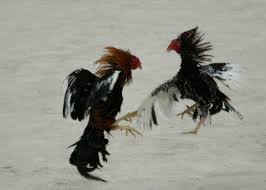
Private and public: give a man a mike and an audience and you will hear a torrent of opinions, jokes, facts and whatever there is in his head, just because men love attention; it helps them with self-assertion (cock fights work in a similar way). Women prefer private conversations, where they can gain more rapport and connection.


Listening and interrupting: same story. Interrupting is like snatching away a favorite toy from your friend in the sand-box: a sure way to attract everyone's attention. At the same time, asking questions is a way of demonstrating a weakness - why do you think men rarely ask for directions?

Jokes and stories: who's the victim? who's the hero? how's it in real life? Men love stories about themselves (see Spider Man, Super Man, Iron Man and Die Hard) while women like stories about others or stories where they were helped/rescued/abused/assaulted/any other way to gain sympathy. Men use jokes to seem witty or to ridicule someone else as a way or welding more power and control.

Do these description fit your experiences and observations?

Below is something to demonstrate the theory - my professor used this in class, and I promise to find something equally illustrative of men :)

****************
Words that Women Use:

FINE:
This is the word women use to end an argument when they feel they are right and you need to shut up.   Never use "fine" to describe how a woman looks - this will cause you to have one of those arguments.

FIVE MINUTES:
This is half an hour.  It is equivalent to the five minutes that your football game is going to last before you take out the trash, so it's an even trade

NOTHING:
This means "something," and you should be on your toes.  "Nothing" is usually used to describe the feeling a woman has of wanting to turn you inside out, upside down, and backwards. "Nothing" usually signifies an
argument that will last "Five Minutes" and end with "Fine"

GO AHEAD: ( With Raised Eyebrows! ) This is a dare. One that will result in a woman getting upset over "Nothing" and will end with the word "Fine"

GO AHEAD: (Normal Eyebrows) This means "I give up" or "do what you want because I don't care".  You will get a "Raised Eyebrow Go Ahead" in just a few minutes, followed by "Nothing" and "Fine" and she will talk to you in about "Five Minutes" when she cools off.

LOUD SIGH: This is not actually a word, but is a non-verbal statement often misunderstood by men. A "Loud Sigh" means she thinks you are an idiot at that moment, and wonders why she is wasting her time standing here and arguing with you over "Nothing".

SOFT SIGH:   Again, not a word, but a non-verbal statement. "Soft Sighs"  mean that she is content. Your best bet is to not move or breathe, and she will stay content.

THAT'S OKAY: This is one of the most dangerous statements that a woman can make to a man. "That's Okay" means that she wants to think long and hard before paying you back for whatever it is that you have done. "That's Okay" is often used with the word "Fine" and in conjunction with a "Raised Eyebrow."

GO AHEAD! : At some point in the near future, you are going to be in some mighty big trouble.

PLEASE DO: This is not a statement, it is an offer. A woman is giving you the chance to come up with whatever excuse or reason you have for doing whatever it is that you have done. You have a fair chance with the truth, so be careful and you shouldn't get a "That's Okay"

THANKS:  A woman is thanking you. Do not faint. Just say you're welcome.

THANKS A LOT:  This is much different from "Thanks." A woman will say, "Thanks A Lot" when she is really ticked off at you. It signifies that you have offended her in some callous way, and will be followed by the
"Loud Sigh."  Be careful not to ask what is wrong after the "Loud Sigh," as she will only tell you "Nothing"

Thursday, June 24, 2010

Women: Know Your Limits!

It all started when my friend Jessica shared this video with me. I barely managed to scrape myself off the floor, wipe off the shed tears as I was laughing uncontrollably and brought myself to typing this post...


Apart from brilliant stinging dry sharp ingenious British humor, this video got me thinking. In the past two days I observed a number of situations when comments were made in a business school environment about females sort of "not making it". I intervened in one instance and tried to soften the edges, the other case was relayed to me post factum, but is there a trend? Or, which is more concerning, is there a prejudice? Still? In the edification of diversity and open-mindedness?


It is a fact, for instance, that in my MBA section there are 22% females against 78% males. How this facts relates to cognitive abilities of either sex is open for scrutiny.


I came across an article about the debate whether the US academic institutions should go back to same-sex classes:
With male academic achievement declining by almost every measure, and their scores possibly dragging down national averages, administrators [in the American education system] are taking a fresh look at same-sex classrooms and the concept that boys and girls might do better when they’re apart. 


Take that! Conservatives should take a vacation and go to Fiji (and rather stay there!). But no - on and on and on - the struggle is ongoing. It is some sort of a vicious society and women always get the bad end of the stick. Barack Obama is criticized for not being masculine enough as if it were a vice or a crime. So being "soft" on an issue of a global importance is characteristic of women. Well, Mrs Thatcher can prove you all wrong. Obama once mentioned that whenever he talks about safety, his masculinity is questioned. Macho much? What else does BP need to do to prove that safety is key in any type of operations?


So whoever you are - know YOUR limits. You never know which one of us is more limited...


Monday, June 14, 2010

Iron Woman

So why is it that the society has two different sets of spectacles when we look at gender issues? We were discussing GDP and economic margin added by females in the workforce. Guess who is winning from that - obviously men, because they can retire earlier and really can relax as the societal expectations have become so much laxer. Seriously, when I hear about campaigns like "Men Cry Too" I want to cry myself. Handing out handkerchiefs in the streets and arranging crying flash mobs is exactly what we need in these severe times of an economic downturn to prove to the civilized world that big boys DO cry.

At the same time, IRON MAN is a SUPERHERO:


While IRON WOMAN is a COMMAND:


Sometime in August last year I was condicting a Gender Awareness Seminar for the Finance team from all over Africa (there were representatives from Ghana, Morocco, Tunisia, Senegal, etc), quite diverse in gender and age. I was jumping around with flashy slides and exciting interactive exercises. everyone agreed that women need to be promoted and given more weight in the corporate world, but when it came down to practical implications, one of the female participants from a Magreb country stated (proudly) that she believed women´s place is in the kitchen and the corporates are putting too much pressure on them. It is like being two different people: a tough and modern business woman at work and subservient wife at home, who is not supposed to have an opinion different from her husband. Trying to combine both is a sure way to schizophrenia. Not in a good way...

What does it leave us with? Iron, woman!

Monday, June 7, 2010

Why girls don't play with boys?

Whether you believe that men and women are from different planets, one fact is true: men and women are different. Not purely in a physiological sense. If it were that easy, hoards of psychotherapists and couples counselors were losing out so much!!!

What can we make out of the following picture?


Apart from the fact that girls are slimmer and have a sense of fashion, one indisputable fact is that they are able to process many more different strings of information than men. I did not say "volume of information" intentionally, because that would be an obvious fallacy. However, when it comes to multitasking or handling different communication channels, women are simply better. Why? One of the explanations is that the part of the brain that connects the two hemispheres (which is called corpus callosum) is larger in women's brain, hence there are more neurons that serve as connectors. Think about it in terms of bandwidth - the more bits your LAN cable can transport, the faster you can exchange data.

Apart from physiological differences, socialization plays a huge role in adoption of certain gender specific behaviors and ways of thinking. Deborah Tannen and Pat Heim are the leading experts in the field, and there is an amazing DVD with Pat Heim where she talks about those differences, beginning her analysis from the sandbox and advancing it all the way through to corporate boardrooms. One of the examples that she gives (that I particularly like) is that men are hunters while women are gatherers, therefore men are oriented towards the results and women are oriented at the process. Thus, when faced with the task of buying a pair of shoes, women are very comfortable, because they can spend hours in the process. Men panic because you can't kill the shoe!!!

It is so important to understand the fact that women think differently. In the workplace, a man would apply for a job because he believes that he has 50% of the required qualifications. A woman will not apply for the same job because she believes she is lacking 50% of the required qualifications. Think how much potential talent slips through our fingers. Small wonder more and more companies are aggressively pursuing campaigns to attract, recruit and develop females.

Finally, a bit of humor so that you feel better :)

**************
A SPANISH LESSON


Teacher was explaining to her class that in Spanish, unlike English, nouns are designated as either masculine or feminine. 

'House' for instance, is feminine: 'la casa.'
 
'Pencil,' however, is masculine: 'el lapiz.'
 

A student asked, 'What gender is 'computer'?'
 

Instead of giving the answer, the teacher split the class into two
 
groups, male and female, and asked them to decide for themselves whether computer' should be a masculine or a feminine noun. Each group was asked to give four reasons for its recommendation.
 

The men's group decided that 'computer' should definitely be of the feminine gender ('la computadora'), because:
 

1. No one but their creator understands their internal logic;
 

2. The native language they use to communicate with other computers is incomprehensible to everyone else;
 

3. Even the smallest mistakes are stored in long term memory for possible later retrieval; and
 

4. As soon as you make a commitment to one, you find yourself
 spending half your paycheck on accessories for it. 

(THIS GETS BETTER!)
 

The women's group, however, concluded that computers should be Masculine ('
el computador'), because: 

1. In order to do anything with them, you have to turn them on;
 

2. They have a lot of data but still can't think for themselves;
 

3. They are supposed to help you solve problems, but half the time they ARE the problem; and
 

4. As soon as you commit to one, you realize that if you had waited a little longer, you could have gotten a better model.
 

The women won.
 

LinkWithin

Related Posts with Thumbnails